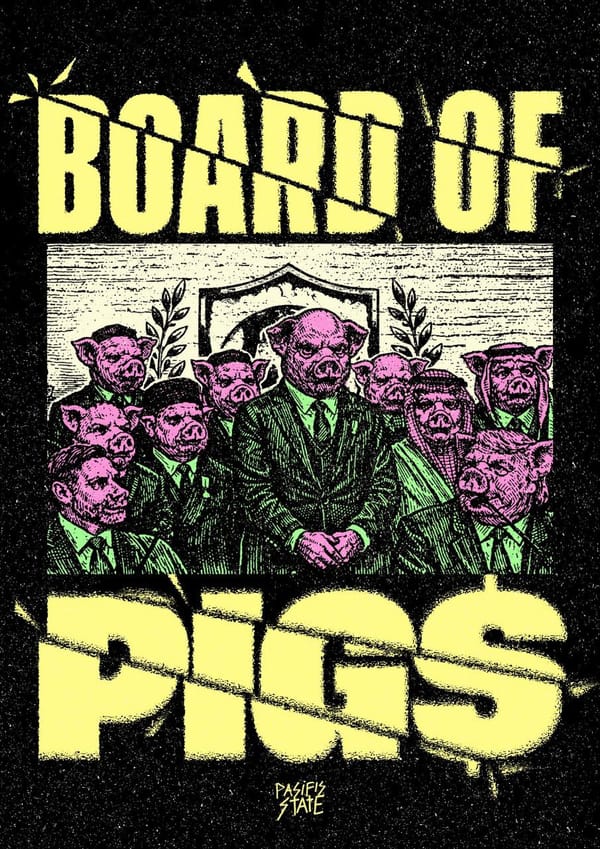
Mamdani and Political-Economy


Zohran Mamdani is a Muslim democratic socialist running for New York City mayor. He has been smeared for his pro-Palestinian stance being a Muslim active in US politics where even as Israel's genocide in Gaza unfolds before our eyes, the political establishment of the United States is still keen to tar opposition to Israeli policy as antisemitic. He positions himself as an alternative for working people of all ethnic backgrounds to Eric Adam's corrupt and Trump subservient term as mayor. His main opponent is former governor Andrew Cuomo who still racistly insists on mispronouncing Mamdani's last name. Mamdani's undeniable appeal is that if he wins the race, he can make New York a multicultural state catering to all New Yorkers regardless of class and race and acting as a bulwark against Trump's increasing nativist authoritarianism.
When asked what democratic socialism means to him Mamdani says that its fundamental meaning is a state structure that ensures the economy functions to serve all members of society in their aspirations for political-economic inclusion and satisfaction of their cultural needs. He proposes to achieve this mainly through social programs such as universal childcare provision and an open declaration of anti-racism and multiculturalism. This "democratic socialism" is less socialism as an actual political philosophy and ideology and more capitalism with a human face that harkens back to America's new deal era under FDR. The idea is not to overcome the class domination inherent to capitalism in favor of a classless free community of human beings, but to ensure that class inequality doesn't get in the way of the basic needs of all members of society by deploying the bureaucratic structures of the welfare state.
This form of political-economy has its roots in the developmentalist centrist liberalism of the post-war era. Western countries at the core of the capitalist world-economy took on protectionism, social spending, and aid to the third world countries of the periphery under the assumption that the capitalist world-system needed to facilitate universal technocratic (rule by experts) development which narrowed, but did not eliminate inequalities of class, political power, and cultural status. Along with the communist party dictatorships in the east which largely bought into developmentalism wrapped in Marxist rhetoric this form of political-economy facilitated a world redistribution of wealth that integrated masses of people into the bureaucratic structures of the capitalist world-system (the state, political parties, and unions).
None of this undid the structural inequalities of capitalist society because this was not the point. The point was to strengthen those inequalities by giving more of the lower strata of society (workers, minorities, colonized peoples) a stake in the system which depends on them, making the masses less likely to overturn those inequalities. The entire process was characterized by the commodification of social life via what the Frankfurt school Marxists called "instrumental reason" in which natural science, social science, philosophy, and mass culture all became tools for the bureaucratic state to enforce conformity to capitalist social relations. Thus, while it is easy to look back on post war America as a liberal utopia, that utopia was from the point of view of workers, minorities, and the colonized an iron cage.
That utopia, or iron cage, was broken up by the neoliberal turn first under Regan and Thatcher, then under Clinton and Blair when the capitalist world-economy could no longer sustain developmentalism. Aid to the third world, social spending, protectionism, a seat at the table for unions, all constrained the ability of capitalists to profit via the unpaid labor of workers, unequal exchange between third world and first world nations, as well as discrimination on the basis of race, sex, sexuality, ect. in the division of labor. Developmentalism was thus rolled back in world politics in favor of austerity, discipline of labor, free trade, and debt subservience of third world countries to first world financial institutions such as the IMF.
To imagine that by a changing of the guard in political leadership American capitalism can simply be rolled back to the developmental era with a 21st century multi-cultural face is to delude oneself into thinking that capitalist political economy is dictated by sound policy and high-minded liberal political philosophy, rather than the needs of capitalists to squeeze workers in order to make profits. It is also to lionize developmentalism in a way that asks us to turn a blind eye to the iron cage of instrumental reason which had a hand in the totalitarian, imperialist, and consumerist nightmares of the 20th century. So, while Mamdani's campaign might seem like a robust alternative to MAGA authoritarianism, in fact it represents an illusory hope of winding the political-economic clock of world capitalism back 50 years, not in service of overcoming class domination, but in service of class domination with a human face.
Mamdani's campaign is not unique in this regard. Bourgeois democracy is ultimately about finding the most advantageous way of engineering consent to the dictatorship of the bourgeoisie. Even when real ideological socialists and communists ran candidates doing so required them to focus less and less on the liberation of the working masses from the straitjacket of class society and focus more and more on integrating their movement into the institutional structure of bourgeois politics. While oppressed people can in some circumstances get what they want by voting, mobilizing for electoral campaigns, and running for office, in doing so they subordinate their political activity to the instrumental reason of the capitalist state. This bureaucratic rationality, even if it momentarily distributes benefits to the oppressed, only does so for the purposes of the long-term reproduction of their oppression, such that those benefits will disappear with the oppressors need to squeeze the oppressed in order to maintain their positions of power.
Observations like these have led Anarchists to oppose electoral participation of all forms since the 19th century. Since the rationality of the capitalist state naturally reproduces the hierarchical structures that sustain capitalism the resistance of the oppressed needs to take place outside the electoral arena. The only realistic avenue of resistance is the organization of a revolutionary movement controlled by the oppressed themselves, a self-organized labor movement to facilitate the class struggle against all forms of social domination. The building of such a movement proceeds genuine ideological socialism in its decentralist form where the idea of capitalism with a human face is rejected as an absurdity. Class domination will never be humane, even if "democratic socialists" could drag the capitalist world-economy back in time to its developmentalist phase.
Sources
https://www.npr.org/2025/06/25/nx-s1-5444846/zohran-mamdani-nyc-mayor-race
https://www.youtube.com/watch?v=C_2TVr6Hlpk
World-Systems Analysis: An Introduction, Wallerstein
Vote? What For?, Malatesta
https://plato.stanford.edu/entries/critical-theory/
Politics, Tansey and Jackson
Traditional and Critical Theory, Horkheimer