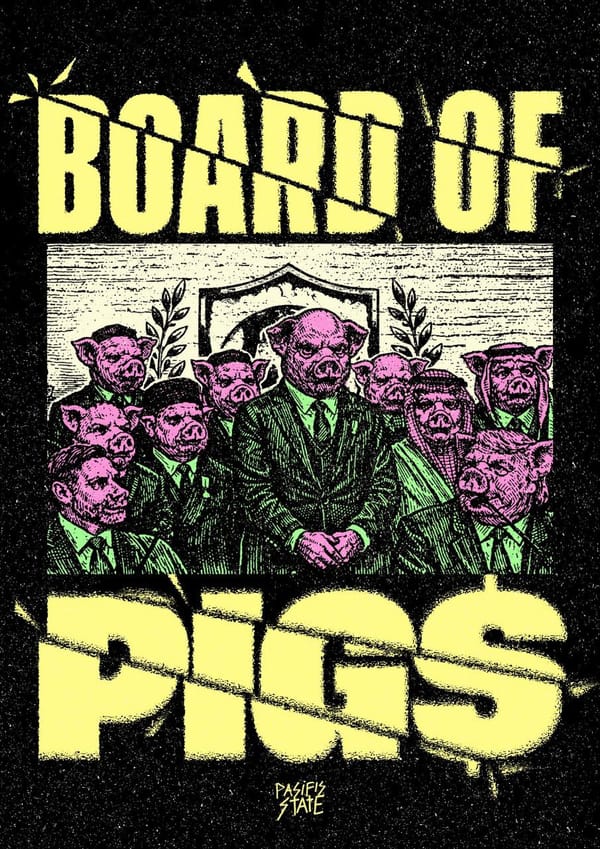
Pseudoscience and Conspiracy Theories: An Anarchist View

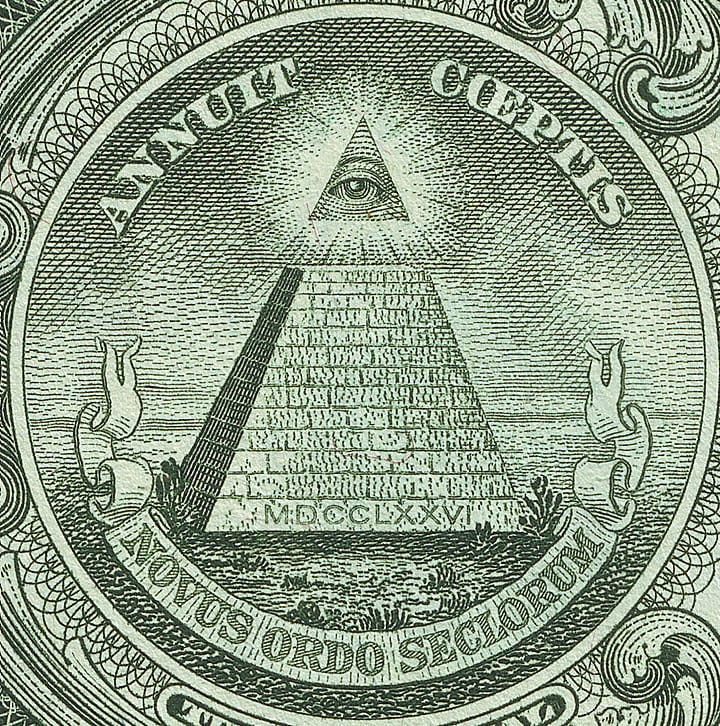
It is often said that the digital age is one of mis and dis-information. Algorithms feed us both accurate and baseless narratives, while giving us very little to distinguish the two from each other to the benefit of opportunistic social forces and elites. That said, widespread falsehoods have been part of the human experience basically forever. The development of fast paced bureaucratic mass societies has aggravated the difficulty in distinguishing reality from fiction as has the development of ideology which both masks and exposes the real interests of human beings.
In capitalist society there are many forces which serve to conceal the true nature of things from human beings. Obviously if companies can profit from falsehoods they will which becomes extra-problematic in the case of the corporatization and commodification of mass media. Governments have always perpetuated falsehoods to control their subjects, and the various ideologies only need to be connected to the truth just enough to mobilize people toward a more ideal society, so ideological falsehoods which as Marx said, provide the ideological subject with an inverted view of reality, proliferate. Add to this basic set of ingredients the crisis of meaning in a bureaucratic, technocratic, and commodified world and we have all the basic causes of pseudoscience and conspiracy theories.
Pseudoscience is hard to define because science itself is hard to define. Philosophers have tried over and over to come up with a serviceable criteria of demarcation separating the two, but such a criterion without significant issues has yet to be proposed. Most practicing scientists probably fall back on the criteria proposed by liberal philosopher Karl Popper; that genuine science must be falsifiable, and pseudoscience is characterized by its lack of this falsifiability. While falsifiability is certainly a desirable feature of a scientific hypothesis the idea that this is what separates science from pseudoscience ignores the work that scientists do to confirm their hypotheses. Indeed, Popper is forced into saying that science doesn't actually confirm anything, it only provisionally accepts certain hypotheses after multiple failed attempts at falsification (where falsification consists in attaining data which do not agree with the hypothesis). Clearly, however, it is just silly to say that the theory of gravity, or biological evolution is not confirmed, that science has not discovered anything through these hypotheses and that neither Newton, nor Darwin were looking for the truth of matters when formulating them.
Likely the best way of demarcating science from pseudoscience is to 1; insist that science is a rigorously empirical practice by definition subject to peer review and public investigation and 2; to look at the historical development of scientific consensus. Thus, pseudoscience is that which fails the test of rigorous, empirical, peer reviewed research and/or that which is historically ruled out by the development of the consensus of scientists. Pseudoscience is promoted both by antiestablishment social forces and elites. The antivaccine movement has until recently been associated with the political left and parents concerned about the abuse of the public's trust by pharmaceutical companies, whereas denial of climate change is promoted by corporate and industry backed think-tanks and public intellectuals.
Conspiracy theories are also somewhat difficult define because like pseudoscience the phrase is normatively laden. Nobody wants to be considered a pseudoscientist and thus proponents of pseudoscience usually take to throwing the accusation of pseudoscience back at the scientific consensus and claiming that their ideas are the truly scientific ones. Likewise, "conspiracy theorist" is a label often used to dismiss the ideas of one's opponents. It is often asked just what is wrong with being a conspiracy theorist anyway. Powerful groups often do conspire for nefarious goals. Climate denial, to repeat an example from above, is essentially an industry conspiracy to delay action on the climate crisis that would hurt profits.
The Nazis conspired to murder 6 million Jews along with other minority groups, the United States government has successfully and unsuccessfully conspired to overthrow numerous foreign governments, corporations conspire with politicians to make policy favorable to the interests of the former, the Bush administration conspired to propagate the falsehood of Iraqi WMDs, ect..ect. Surely, we should be able to point it out when we have a reasonable suspicion of a conspiracy, lives and freedom are likely to depend on it. It is on this basis that philosopher Quassim Cassem makes a distinction between theories about conspiracies (conspiracy theories with lower case "c" and "t") and Conspiracy Theories (with capital "C" and "T"). The former are epistemically neutral (it can be intellectually responsible to believe in them). The latter are by definition intrinsically improbable, amateurish, and politically motivated.
Conspiracy Theories are theories about conspiracies that are put forward by amateurs, rather than experts, in the relevant field, or at least argued in a way considered amateurish by the consensus of experts in that field, for the primary purpose of political propaganda (to scape goat minorities, to discredit experts, to discredit elites, to justify political ideologies, ect.). For this reason, they are intrinsically improbable because they have to argue that the consensus of trained experts is all either deceived, or lying, or both, and that work by amateurs with propagandistic motivations is much more trustworthy. By now you have probably noticed that in defining these normatively negative terms I have presumed that expert consensus is usually much more likely to be true than non-expert attempts at debunking that consensus. This might seem questionable.
Experts can be wrong and lay people aren't morons, so why can't lay people expose the incompetence, or deception on the part of experts? They certainly can, but the issue is determining when a narrative is likely to be true. From an Anarchist perspective it is true that the existing consensus of experts must be useful for the reproduction of existing power structures, otherwise it wouldn't be propagated by elite institutions of knowledge. However, those elite institutions still have an interest in doing rigorous work to understand the world. You can't make profits and govern populations without any understanding of the natural and social world within which you do it. So, the research carried out by academics at universities is most of the time legitimate research and is in fact most of the time the most credible research on the given topic. It is for this reason that there have always been intellectuals who rebelled against the ideological hegemony of the social systems which created them by using precisely their own intellectual training and the knowledge of their field to throw doubt on existing social institutions.
There is a reason that when critiquing capitalism Marx turned to the academic political economists of his day for the facts of how the capitalist system works, rather than some raving 19th century conspiracy theorist, or pseudo-social scientist and a reason that Russian Anarchist Peter Kropotkin took pains to draw on scientific ecology for his social theory of mutual aid, rather than spiritualist soothe sayers. Thus, expert consensus is much more likely to be true than politically motivated amateur research claiming that the former is the real pseudoscience or is prosecuting a cover up. Because pseudoscience and conspiracy theories shroud reality in this way they cannot be tools of liberation for the oppressed. The power structures of the capitalist world-system are built on the material social relationships between human beings which make up human societies.
These relationships are revealed by rigorous scientific investigation. When scientific/expert consensus is thrown in doubt human beings are deprived of knowledge of the social relations in which they are embedded. An effective criticism of the said social relations requires that human beings understand them, so pseudoscience and conspiracy theories are the kind of ideological phenomena which keep human beings in chains by inverting reality in the minds of those human beings. If you believe a cabal of minorities and their progressive allies are the reason for a decline in your standard of living, rather than increasing wealth inequality, then your energies will be mobilized by campaigns of bigotry in the service of the very elites within your in group that are capturing more and more of the global share of social wealth.
If you believe that vaccines cause autism, then you will hand over your hard-earned money to snake oil salesmen and make the social provision of scientifically supported healthcare much harder. If you believe "the Jews" are responsible for the national oppression of the Palestinians, rather than the Zionist movement, the Israeli state, and its western imperialist benefactors, then instead of attacking the actual perpetrators of genocide, you will attack historically vilified people who have nothing to do with it. Since changing the world requires understanding it, conspiracy theories and pseudoscience, propagated by establishment, or antiestablishment sources, are two of Anarchism's biggest enemies. Then there is the thorny question of how to fight pseudoscience and conspiracy theories.
Experts are often at a loss on this question. Clearly alternative narratives have to be offered in the public space that can effectively compete with and thus expose the problematic nature of pseudoscience and conspiracy theories. However, the efficacy of the latter in swaying public opinion is fueled by systemic issues as described above. The fact that most people have no control over the political and economic decisions which effect their lives, that there is a complicated and specialized academic division of labor which alienates the public from knowledge of the world, that minority groups are constantly and erroneously blamed for social ills, and that existing institutions are premised on a disenchanted and impersonal technocratic world picture, creates the most fertile ground conspiracy theorists and pseudoscientists could want. Only Anarchism offers an immediate alternative in which the masses can directly organize themselves on their own terms to take control over social wealth and social administration, to fight discrimination and promote autonomy, to decentralize social power, and to replace coercive institutions and relations with voluntary and mutually beneficial social arrangements. If you don't like pseudoscience, if you don't like conspiracy theories, become an Anarchist. If you want real liberation, drop the conspiracy theories and pseudoscience.
Sources
Conspiracy Theories, Cassem
Pseudoscience: A Very Short Introduction, D. Gordin
Sociology: The Basics, Plummer
Anarchism: Key Concepts, Honeywell
World-Systems Analysis: An Introduction, Wallerstein
How to Overthrow the Illuminati, Will, Chino, Saudade, and Manos
Democracy: A Very Short Introduction, Zack