The End of Jihadism?

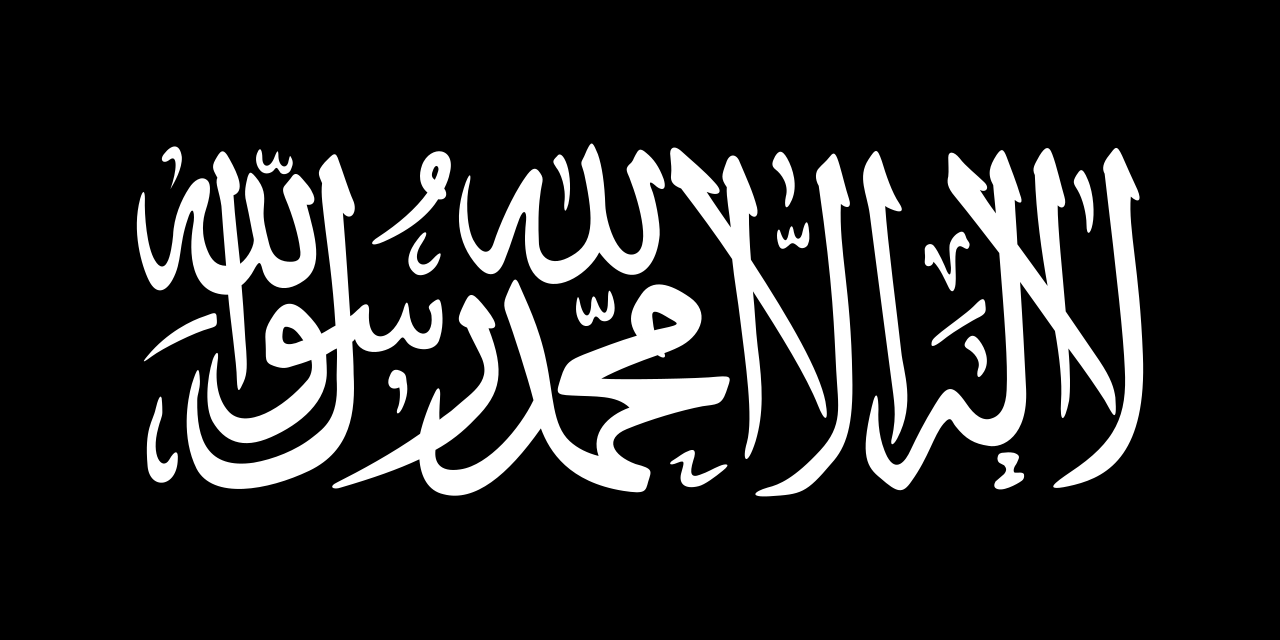
Out of the ashes of the Islamist resistance to the Soviet occupation of Afghanistan a new ideology emerged of a completely new kind. It was not just religious political Islam, or religious fundamentalism. It was a new generic ideology advocating the total transformation of the world-system along religious lines. Inspired by traditionalist and conservative versions of Islam (such as Wahabism, Salafism, and the thought of Sayyid Qutb), but which had taken an entirely different direction in the bloody struggles against foreign control of the middle east, militants of this new ideology such as Ayman Zawahiri and Osama bin Laden came to the conclusion that the secular, commercial culture of the west exported to the Islamic world by the geopolitical and world-economic institutions of the modern world-system is an existential threat to the Islamic culture. They thought that this secular threat had taken up deep roots in the middle east through the established political institutions of the region.
The only solution in their minds was to reinterpret the Islamic notion of Jihad (spiritual struggle, often with a personal connotation) in terms of an Islamic, trans-national revolutionary war against the entire western dominated world-order, for the establishment of a new world order centered around sacrifice to the Islamic cause. In the late 20th and early 21st centuries this new ideology built an international terrorist movement carrying out attacks on political (including civilian) targets and seeking to build an Islamic world-empire on the ashes of the capitalist world-system. The first Jihadist organization; Al-Qaeda meaning "the base" under the leadership of bin Laden and Zawahiri master minded the September 11, 2001, attacks on the Pentagon and World Trade Center buildings, massacring thousands in the political and financial heart of the world-system, triggering the invasion of Afghanistan which under the Taliban had given Al-Queda a safe haven. Even after an international war on terror launched by the United States and its allies designed to eliminate the organization, it remains today.
The fallout of the invasion of Iraq by the United States and its repression of the subsequent insurgency precipitated the formation of IS (Islamic State) out of the spent insurgent forces, Islamic militants who made connections in western run detention facilities, and former Iraqi Ba'ath military officers. IS went on to become an internationally recruiting fighting force which in contrast to Al-Queda's tried and tested method of terroristic attacks, developed ambitions of conquering territory bit by bit to create a global caliphate. Terroristic attacks were then creatively and bloodily integrated into this global insurrection against the western dominated world-order. Whereas Islam traditionally regards suicide as a sin, IS Jihadists justified suicide terrorism (blowing oneself up with a bomb in a crowd for instance) on the basis that terrorist attacks in the name of the cause was in fact of form of martyrdom, sacrificing one's own life for the greater cause of the global caliphate.
The fanatic dynamism of IS allowed it to exploit sectarian divisions in Iraq and civil war in Syria to conquer a huge swath of territory in which they ruled, took sex slaves, murdered opposition and minority groups, destroyed ancient heritage sites, taxed the population, engaged in illegal trade, and imposed patriarchal Islam by force. In the early 2010s IS thus became an actual state cutting across the boundaries of existing nation states, launching terrorist attacks abroad, and menacing the entire world order. How could this have happened? The Islamic world like many other parts of the world has been subject to western political domination first through colonialism, then through unequal exchange in which "the developing" world is geared toward production processes with the least return in profits and national wealth. Thus, nations in the middle east are typically peripheral, or semi-peripheral with respect to the world-economy, being subject to the most onerous labor processes with the least commercial return. Parallel to political, cultural, and economic domination by the west Islam, like all other world-religions, has had to wade through the waters of modernity adapting not only to secular academic standards, but also secular politics.
Muslims in modernity, in addition to dealing with the existential threat posed by modernity to traditional religious ways of life and modes of thought, have also unlike Christendom generally, been subject to colonial and neocolonial domination. At first middle easterners attempted to deal with modernity and its discontents much like the rest of the world; via secular political nationalism. Pan-Arabism suggested that all the Arab peoples constituted one national community with a right to political self-determination. Parallel to and overlapping with Pan-Arabism during the Cold War was "Arab Socialism" (e.g. Nasser, the FLN, and the Iraqi and Syrian Ba'ath). Arab socialism wasn't socialism as such, but an Arab nationalist version Jacobin-style liberalism in which a virtuous Arab republic was to be cultivated by a political dictatorship. The goals of Pan-Arabism were never achieved as separate Arab nation-states with their own interests were established and Arab socialism lost all its luster with the victory of Israel in the 67 Arab-Israeli War and the subjugation of Arab Socialist regimes to the IMF (International Monetary Fund known for subordinating developing countries to structural adjustment programs favorable to the west).
It was in the context of the failure of secular Arab nationalism that states and movements in the middle east and Islamic world gravitated toward political Islam privileging Sharia as the state's legal structure. Political Islam is a much broader phenomena than Jihadism. The Islamic world in general rejects Jihadism and abhors it just as much as the non-Islamic world, even when the former embraces political Islam. Most of what gets called "Islamism" is really an Islamic form of illiberal conservativism hoping to reunite national politics with the Uma (Islamic political economy). It is illiberal in the sense that it rejects liberal institutions such as the rule of law and constitutional limitations on government and conservative in the sense that its political goal is the maintenance of traditional Islamic culture within modernity. By contrast Jihadism calls for the destruction of all existing sources of Islamic spiritual and political authority, seeing them as corrupted by the tendrils of western secular culture. Conservatism also tends toward nationalism, with conservatism in the Muslim world being no exception, where Jihadism explicitly rejects nationalism as an obstacle to the global caliphate.
Jihadism is thus a right-wing revolutionary ideology with its genesis in the most intractable social problems of the Middle East and Islamic World, themselves ultimately having their origins in western domination of the east and global south, as well as the difficulties that all religions have faced adapting to the modern secular worldview and secular politics. Jihadism is both despised and retains an ability to mobilize around the world because it declares the entire world-system anathema on the basis of the way commercial forces and secular politics have subjugated the Middle Eastern peoples and the wider Islamic community, while embracing a heretical version of Islam to be violently imposed on the world's population; most immediately the very same Middle Easterners, Arabs, and Muslims under the thumb of Western imperialism and neocolonialism. As such the United States led a coalition including the Kurdish SDF for the elimination of IS in Syria and Iraq.
This campaign was bloody and led to the killing and displacement of civilian populations in proximity to IS rule. Ultimately, by the late 2010s, IS' state was demolished and the organization completely suppressed in Iraq and Syria. The fall of IS in the same decade in which it rose to unprecedented prominence makes Jihadism seem like a violent flash in the pan, an ideology so radical that neither oppressed people, nor those in power were ultimately able to tolerate. There is something to that picture, however, Jihadism didn't end with IS since none of the social problems which animate it have been resolved to any degree.
Parallel to events in Iraq and Syria Africa has been another cite of the development of Jihadist ideology in the first 30 years of the 21st century. Like the middle east Africa is beset by the continuing legacy of Western colonialism and neocolonialism. Unequal exchange has made Africa an impoverished continent and arbitrary tribal/ethnic divisions created when Europe carved up Africa for its own material benefit continue to destabilize the region's politics. Add to this mixture the existence of Islamic communities dealing, like their Middle Eastern counterparts, with the destabilizing forces of modernity, it was only a matter of time before dedicated minorities of Islamic extremists would bring Jihadism to the continent.
Parallel with IS Boko Haram made a name for itself by kidnapping little girls. Even after IS fell in Iraq and Syria the steady increase in Jihadi terrorism in the Sahel region of Africa has allowed JNIM, an African branch of Al-Qaeda (rivals of IS), to build itself, establish control over swaths of territory funded in IS fashion with taxes on the population and black-market activity, and recently to menace the capital of Mali. The Jihadi struggle in the Sahel has thus continued even as it has been suppressed in Iraq and Syria, giving pause to the notion the Jihadism was a creature of the previous 30 years and has effectively been eliminated. JNIM and other Jihadists now threaten the Sahel with wider regional destabilization which is already beginning to mirror the terrifying success of IS in the Middle East.
Despite the fact that Jihadism has been a center piece of the justification for Western neocolonial interventionism during the War On Terror the fact that Western meddling is as much a driver of Jihadism as a tool for suppressing it must be faced up to. The Soviet Occupation of Afghanistan engendered a conservative Muslim opposition force known as the Mujahideen which in turn was sponsored materially by the United States against the Soviets. It was these Mujahideen resistance circles, drawing in fighters from across the Muslim world, that served as an initial breeding ground for Jihadi ideology. IS was born out of western sponsored detention camps and the insurgent resistance to the US occupation of Iraq, the same occupation that gifted the insurgents the skills of Ba'athist commanders who had been barred from participation in the occupation's reconstruction efforts.
In return for Saudi oil the United States handed the Wahabi illiberal conservative regime large amounts of monetary support that was then funneled into Salafi education programs across the middle east. Salafism is the version of Islam which insists on exclusive observance of strict interpretation of Islamic doctrine and strict, exclusivist Islamic culture, forming the spiritual basis for both Islamist illiberal conservativism and Jihadism, Wahabism being the Saudi version of Salafism originating from 18th century Sunni Islam. Before the application of the War On Terror to the Sahel by the United States and France there were very low levels of terrorism. Since the terrorist threat has ballooned, effectively creating the Jihadist threat in the Sahel.
The reason Jihadism has manifested in the late 20th century and early 21st, rather than along with the forms of Salafism that formed in the earlier period of modernity, is because the centrist geoculture that politically regulates the world-system was thrown into question by 20th century developments. Since the failed world revolution of 1848 the capitalist world-system has been politically dominated by a centrist alliance of moderate liberals and conservatives. Disadvantaged populations were accommodated piecemeal through civil rights, political representation, and social welfare without dislodging the hierarchical division of labor which the capitalist world-system is premised upon. In the interwar period crises of economic and social stability gave rise to another right-wing revolutionary threat to the world-system; fascism.
Fascism is a revolutionary version of nationalism calling for the annihilation of all elements alien to the national community, the constant heroic mobilization of that community, and the destruction of the fetters on national sovereignty and power represented by international law, geopolitical hierarchies, and the commercial world-economy. Hitler's Germany and Mussolini's Italy made WW2 in an effort to overturn the capitalist world-system according to these goals. Like Jihadism the resulting bloodshed and repression (for instance in the murder of 6 million Jews) galvanized oppressed peoples and elites into a united front to crush the fascist led Axis powers and marginalize fascist ideology. Socialism, the premier left-wing revolutionary ideology had cohered in the mid-19th century advocating the replacement of the hierarchical capitalist world-system with a world socialist confederation made out of free and equal associations of producers had by the 20th century marginalized decentralist versions of socialism for a focus on capturing centralized political power.
Socialist political parties achieved revolving electoral success in the west while in the east Communist parties came to dominate state power in about a third of the world. Holding on to centralized political power meant integrating in the hierarchical world-economy and interstate order of the capitalist world-system, while promising the populations they ruled over that more sweeping social change would eventually become reality. Thus, the triumph of moderate liberalism and conservativism, the destruction of fascism, and the neutralization of socialism ensured that capitalism was stabilized by a functionally and often explicitly centrist form of world politics. All of this was underwritten by the expansion of the world-economy which allowed capitalists and states to make concessions to the lower classes and minority social groups.
A second world-revolution was made by a protest movement of workers and students who called out the imperialist structure of the capitalist world-system and the Socialist and Communist parties. They called out the latter for presiding over inequalities and hierarchies which had always existed in the capitalist world-system, rather than fundamentally transforming the world as they had promised to. Even though the revolution was suppressed the oil price crises of the 70s triggered a contraction of the world-economy in which states were forced to implement austerity, suppress the power of the underclass, and make up for the decline in the production of real goods and services in terms of financial speculation. The world-economy has never actually recovered from this decline in real production, which spells disaster given that financial speculation can only redistribute debt which will eventually come due.
The 68 revolution and decline in real production displaced the centrist geoculture such that moderate liberals and conservatives had to lurch to the right and the old left collapsed into geocultural marginalization. Communist regimes either dramatically reformed, or disappeared overnight, Socialist parties were forced to accept austerity and failed to compete with the neoliberal program of budget balancing, financialization, and labor flexibility adopted by liberal and conservative administrations from Thatcher and Reagan to Clinton and Blaire, and organized labor experienced a massive hemorrhage in power and membership. The result was that new forces to the right and left of center like Jihadism could be unleashed within the geoculture. Fascism remained geoculturally marginal because its barbarism was put on display for the world in the mid-20th century. While a similar phenomenon of geoculture marginalization has affected Jihadism the fact that its barbarism has been confined to particular parts of the world means that it has not yet experienced the same universal moral distain.
So, Jihadism will continue to be an operative force in areas of destabilization unless it is displaced by rival radical social forces or demonstrates its capacity for barbarism on an even grander scale than it has already. Here decentralist socialism can offer an alternative radical social movement. It can propose the replacement of centralized structures of power such as the state and exclusivist cultural mechanisms such as sectarianism, nationalism, and ethnocentrism with humanistic free association and collaboration as well as breaking down the hierarchical commercial world-division of labor with voluntary collaboration among producers to meet communal needs (a practice Anarchist Communist Peter Kropotkin referred to as mutual aid). Such a new social movement could create self-organized forms of equal association among different ethnic groups and communities of culture in place of neocolonial geopolitics and economy and a radical humanist opposition to religious exclusivism and repression. This would be the true end of Jihadism.
Sources
https://www.bbc.com/news/world-middle-east-35695648
The Bitter Lake, Adam Curtis
The Power of Nightmares, Adam Curtis
The Abrahamic Religions: A Very Short Introduction, L. Cohen
World-Systems Analysis: An introduction, Wallerstein
Fascism: Key Concepts, Griffin
Arab Socialism, Ozgur Usenmez
Rise and Demise of World Communism, Breslauer
Turning Point: 911 and The War On Terror, Knappenberger
The Rise and Fall of The Neoliberal Order, Gerstle
Socialism: A Very Short Introduction, Newman