Blockades and Solidarity | Emma Goldman Collective (Quebec, 2025)

Blockades and Solidarity
The MAMO Alliance (First Nations) fights against Bill 97, a colonialist overhaul of the forestry regime
A text by the Emma Goldman Collective*
Text first published in French on Liberté Ouvrière on August 29, 2025,
then in English on Liberté Ouvrière on August 30th, 2025
« … the state, the bourgeoisie and even the working class have been constituted in part through the destruction of First Nations, the dispossession of their territories, the extortion of their resources and settler colonialism
– Francis Dupuis-Déri et Benjamin Pillet, 2019. L’anarcho-indigénisme. Lux Éditeur, Montréal. p.35
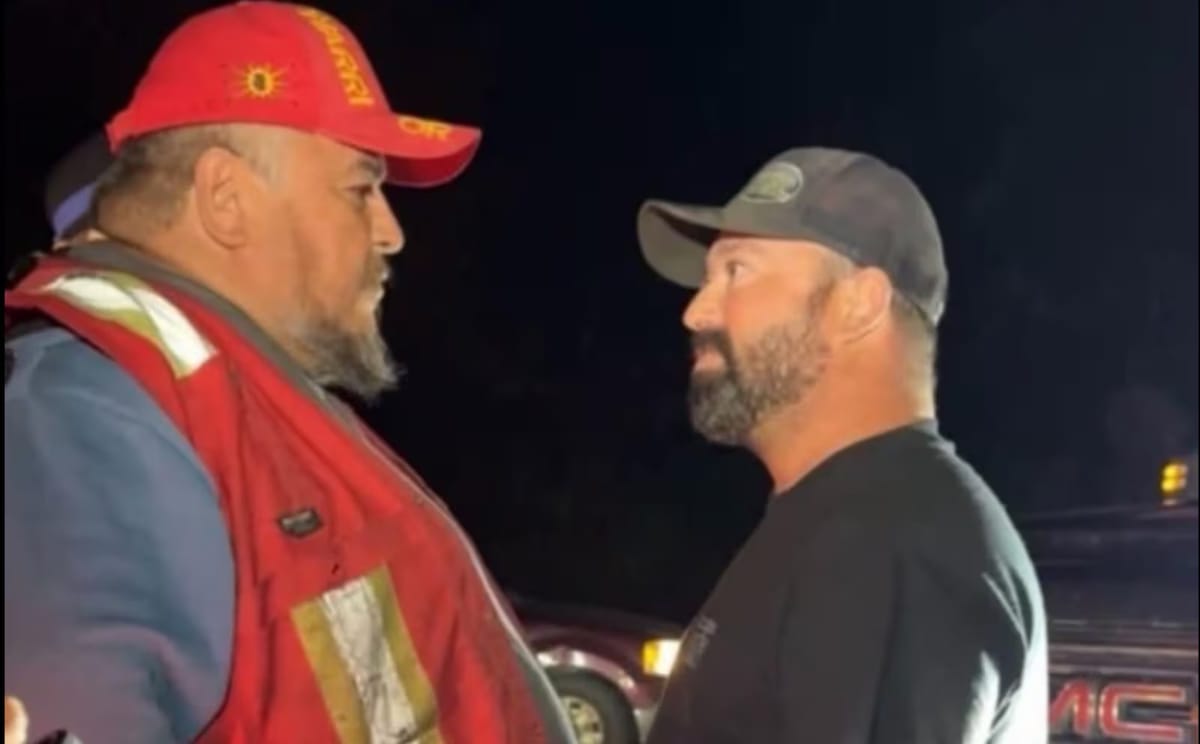
Over the past few weeks, blockades of forestry roads have been carried out in Haute-Mauricie and in the north of Lac-Saint-Jean [in the province of Quebec in Canada] by the MAMO Alliance (First Nation). These actions, conducted to contest Bill 97 on forestry regime reform, have interrupted or disrupted forestry operations.
Uniting First Nations for Sovereignty and Territory Protection
It was on April 11, 2025 that an assembly was held in La Tuque to found the MAMO Alliance. This alliance, whose name means « Together » in the Atikamekw (Nehiromowin) and Innu (Innu-aimun) languages, aims to bring together First Nations in exercising their sovereignty. It was initiated by the land guardians of Nehirowisiw (Atikamekw), Nitassinan (Innuat) and Ndakina (Abénakis).
Opposition to Bill 97 and Sovereignty
The land guardians express their disagreement with Bill 97, which modifies Quebec’s forestry regime. They believe this law endangers forest caribou and forest sustainability, thus compromising the traditional Indigenous way of life during the climate crisis.
Numerous blockades and demonstrations of sovereignty have generated tensions between Indigenous protesters and (non-Indigenous) forestry workers, also fueling hateful comments on social media. In response to this situation, the Quebec government has promised to negotiate with First Nations to find consensus and consider amendments to the bill.
Traditional Indigenous groups (like the MAMO alliance), who rely on ancestral rights and traditions, maintain that true authority over forestland belongs to families and land guardians. They consider that current band councils, established by the Canadian government’s Indian Act system, do not reflect traditional sovereignty and are perceived as accomplices of the colonial system. These groups believe that band councils cannot negotiate on behalf of all members of the nations.
The Petapan Treaty and Forest Management
This tension between band councils and traditionalists is not new; it also appears in other negotiations, such as the Petapan Treaty. Under negotiation for more than forty years, this draft treaty involves the Petapan Group, which brings together the First Nations of Essipit, Mashteuiatsh and Nutashkuan, as well as Canada and Quebec, and aims to recognize, confirm and protect Innu rights. However, traditionalists oppose this treaty, claiming that the traditional governance of hereditary chiefs and territory guardians is being set aside in favor of band councils.
Conclusion
There will be no reconciliation without reparation. The Canadian and Quebec states were established on the appropriation of Indigenous peoples’ lands and resources. To achieve true reconciliation, it is essential to support and engage in decolonial and environmental struggles. It is crucial to become true allies in this battle to protect the living world. That is to say, to avoid in our relationships between non-Indigenous and Indigenous people within decolonization movements: « the invisibilization of Indigenous people or the appropriation of their voice, the use of token Indigenous people, the imposition of tactical and strategic choices or a general attitude of guilt relief to give oneself a good conscience » (L’anarcho-indigénisme, p.10)
Footnote:
(1) Unlike other regions of Canada where historic treaties were signed, vast expanses of territory, notably in British Columbia and Quebec, have never been subject to land cession treaties.
*The Emma Goldman Anarchist Collective is a political organization active in the Saguenay-Lac-Saint-Jean region since 2008. We advocate for combative social movements and the emergence of a broad and open libertarian left. We distribute the newspaper Cause Commune and the regional bulletin le Pic-Bois. Identified with the anarchist/autonomous current, we participate in the theoretical development and implementation of these ideas and practices. To contact them: cegsaglac (a) riseup.net