Wage Inequality in Bangladesh’s Garment Industry: The Cat is Out of the Bag

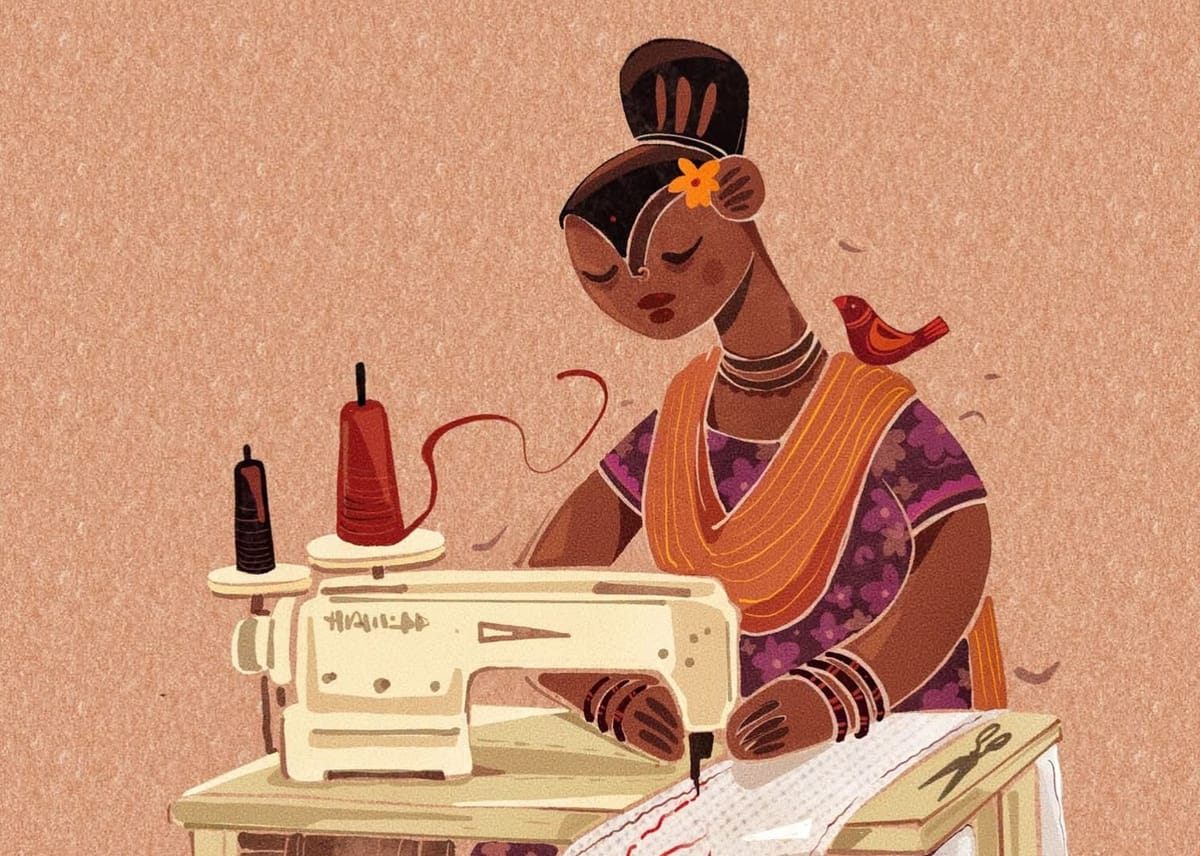
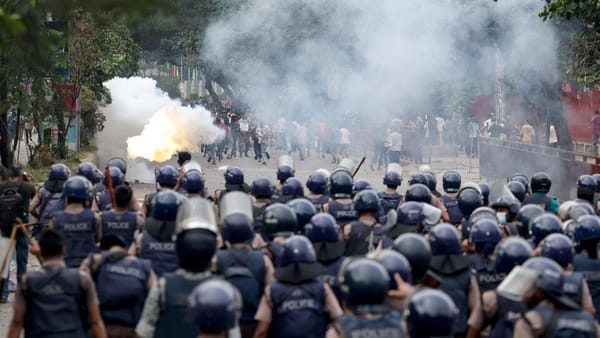
The Ready-Made Garment (RMG) sector, the primary engine of Bangladesh’s economy, has long been embroiled in a profound internal crisis. Recent street protests by workers demanding a living wage have exposed the industry’s structural vulnerabilities. The forced shutdown of hundreds of factories, severe law-enforcement crackdowns on protests, and continuous pressure from factory owners have drawn global scrutiny. Recently, factory owners claimed that the ongoing strikes resulted in an average daily loss of BDT 1,500 crore (approximately $125 million). Paradoxically, this very claim has exposed the true economic equation of production and the stark disparity in workers' actual earnings.
Protests, Deadlocks, and the Owners' Narrative
During the recent unrest, at least 1.5 million workers were forced into work stoppages and involuntary leave. Factory owners and influential circles heavily promoted the narrative that these protests were crippling the national economy and inflicting astronomical losses on businesses. Their central argument remained unchanged: to keep the industry alive, workers' wage demands must be contained; otherwise, factories would lose their global competitiveness and shut down. However, a fundamental question arises: in an industry built entirely on the sweat and labor of its workforce, how wide is the gap between its true economic output and what the workers actually receive?
To answer this, one must examine a simple yet revealing economic calculation. Every day, 1.5 million workers collectively produce or process export-ready garments valued at BDT 1,500 crore. This translates to an average daily output of approximately BDT 10,000 per worker. Assuming a standard work schedule of 26 days a month, the total monetary value generated by a single worker reaches nearly BDT 300,000 ($2,500) per month.
Output Value vs. Actual Wages: A Staggering Gulf
Under the current wage structure, the minimum monthly wage for garment workers has been set at just BDT 12,500 (roughly $104). Juxtaposing these two figures reveals a disparity that is not merely inequitable, but fundamentally inhumane. While a worker’s labor generates nearly BDT 300,000 in economic value by the end of the month, their compensation stands at a meager BDT 12,500.
An analysis of this ratio demonstrates that workers receive barely one-twenty-fourth (approx. 4%) of the actual value they generate. The remaining twenty-three parts are absorbed by intermediaries, multinational buyer brands, accumulated factory profits, and other players along the supply chain. This statistic clearly explains why factory owners recoil at the mention of wage increases and consistently invoke the survival of the industry. The issue is far less about safeguarding the sector's existence than it is about protecting mountainous profit margins.
The Moment of Reckoning
The ongoing crisis proves that the primary architects of Bangladesh’s economic growth have long suffered under systemic exploitation. Whenever workers demand fair wages to keep pace with the rising cost of living, they face state force and legal persecution. Yet, the main secret behind Bangladesh’s competitive pricing in global markets has always been this hyper-cheap labor force. International buyers benefit from cheap apparel, and factory owners reap vast profits—while the workers who build this wealth remain trapped in economic hardship.
This model cannot endure indefinitely. While state force and factory lockdowns may temporarily suppress dissent, the current framework is unsustainable over the long term.
Historically, Bangladesh’s economy shifted from agriculture to a thriving state-supported jute industry, which drew millions of farmers into factories. Eventually, as the RMG sector expanded, public jute mills were phased out. Today, rising domestic labor costs and inflation are driving capital outward toward less developed nations in Africa and Asia, where labor and raw materials are cheaper.
Recognizing these structural shifts, former Prime Minister Sheikh Hasina sought to modernize and restructure the economy. To offset potential stagnation in traditional manufacturing, her administration prioritized tech-sector investments, digital literacy, technical training, and educational reform aimed at cultivating a skilled workforce. However, the leadership that emerged following the uprising of August 5, 2024, has yet to demonstrate such strategic foresight. Consequently, the current BNP-aligned political alignment threatens not only class equity but also domestic industrial capital—prompting even local capitalists to actively oppose the political status quo.
Amid this volatility, the opposition faces mounting uncertainty, centered largely on a single prospect: a political return. Following her departure to India, Sheikh Hasina announced plans to return to Bangladesh this December, mobilizing millions of supporters alongside tea-garden workers, garment laborers, hawkers, and rickshaw pullers—grassroots groups whose economic demands are frequently labeled by opponents as partisan agitation. Mass-based political movements cannot be erased through hasty legislation. Today, fear of this return has forged an awkward alliance comprising anti-Awami League political factions, elements of the state administration, and student groups operating under multinational capitalist frameworks, all united solely to preempt the Bangladesh Awami League.
Yet, this broad anti-establishment coalition underscores political insecurity rather than strength. If the Awami League lacked popular support, consolidating such disparate political and administrative elements under one roof would be unnecessary. This improvised unity signals to the international community that the Awami League remains a central, highly organized political force in the country.
As I argued in my recent book, Behind the July Spring:
"Whether it is the Yunus administration, BNP, Jamaat, NCP, or the Awami League—all essentially act as custodians of the existing capitalist framework. Whichever force holds power, this 'honeymoon period' will be short-lived. Millions of working people will inevitably use their newly claimed democratic space to take to the streets, seeking relief from intolerable economic burdens. We are already witnessing widespread blockades and protests across districts. As class tensions heighten, the state apparatus will be forced to take a side—either backing exploitative owners and multinational corporations, or standing with the workers. Ultimately, the state will protect capitalist interests, as the system itself was designed to serve them. If past governance proved authoritarian, it was not merely a personality trait of individual leaders, but a reflection of a capitalist model built on the intense exploitation of labor. Under such conditions, social dialectics make capitalist democracy inherently unstable. In times of crisis, the ruling class sheds its democratic facade to maintain hegemony through authoritarian means."
Ultimately, economic reality will impel workers to organize independently against superficial policy fixes. As structural contradictions become fully exposed, working people will look past political rhetoric to build autonomous labor organizations aimed at securing the full value and dignity of their work.