Call me Kalar but I am not your Kalar

Since 2020, the “Don’t Call Me Kalar” movement has begun on Facebook with an objective to hinder the utilization of a word which has historically been used to describe people belonging to the sub-continent of India, encompassing Hindus, Sikhs, and Muslims. However, historically, the word Kala has had many connotations, including foreigner, Indian, nobly foreign, or even racial foe. It picks up new deposits from every age it passes through.
Etymology of Kalar
Etymology of the word 'Kalar' is very disputed, however, authoritative dictionaries derive it from the Pāli and Sanskrit word "kula" which means noble descent or ancestry or a patron. The word had been in use in the Pagan period long before any notion of race was formed to indicate a fluid category of maritime travelers, entertainers, and exotic foreigners. Pre-colonial royalty divided the known universe into a cosmic scheme of 101 ethnic groups, each of which included a great number of variants of Kalas, namely Persians, Arabs, people from South Asia, and Western Europe, the latter sometimes called just "white kalars". The cross-cultural encounter found a perfect way into the material life of Burmese as the prefix denoted innovations coming from abroad without implying any hostility which led to formation of terms such as Kala Pae (chickpeas) and Kala Htaing (chairs).
The degradation of the word from an elastic category into a hostile slur is a direct consequence of British rule. With Burma annexed to the British Empire as a part of British India, a significant number of Indian labourers, traders, money-lenders, and civil servants were introduced as a workforce of the colony. Accordingly, the word was imbued with all the hostility toward colonial labour competition, debts, and forced displacement. The most dangerous legacy of this transformation, however, lies not in the word itself but in the deeply xenophobic narrative according to which Burmese-Indians remain guests in Myanmar forever. It undermines the existence of a common history of local struggle and survival.
The Hashtag Revolution: “Don’t Call Me Kala”
State-owned Western media outlets like ABC and France24 used a phrase of the #BlackLivesMatter-inspired “Don’t call me Kalar” social media campaign". According to Progressive Voice Myanmar, it is a historically charged and violent word, where the Muslim minority is often mocked or insulted as 'Kalar'.
As a human rights activist, Dr. Khin Zaw Win assert, renouncing the use of the word Kala is not about the language pedantry but about stopping the humiliating practices of the hierarchy that sees Burmese Indians as foreigners. Thus, just as the derogatory words such as "N words" are no longer acceptable in the West, the word Kala must follow suit.
Because of such a hashtag campaign, Facebook has banned many posts with the word "Kala" or "Kalar" among them such words like "Chickpeas", "Chairs", and "Camels". A huge number of Facebook users have had to go through colonial oppression by an American corporation regarding something very cultural and annoying.
Although the "Don’t Call Me Kala" campaign can be viewed as the crucial campaign, it poses a risk of addressing just the surface symptoms of a bigger problem. In his article "Why I am a Kalar", Huzaifah Islam-Khan, a Burmese-Rohingya, co-founder of the Islamic Institute of Burma states that whether the word Kalar means something good or bad, it denotes a real thing.
The Radical Tradition of Owning the Word
Being an activist raised in a multi-racial and multi-religious home where my Muslim father from Bengali heritage and Buddhist mother met, the years I spent resisting the ultranationalist 969 movement have been centred around the fight for free speech against the Vinicchaya system and censorship of blasphemy related literature. Being the target of conservative and xenophobic Theravada Buddhist nationalists and the Theravada Buddhist supremacist regime of Myanmar, my personal experience is the reason I believe in radical ownership of the word 'Kalar'. Therefore, “Don't call me Kalar'' hashtag campaign embodies shallow careerist activism and serves as a form of virtue signalling NGO campaigns rather than bringing any actual change. It is evident from the very organizers that the campaign is targeting rhetoric rather than systemic racism behind the word, thus, treating terminology as a placebo.
Nevertheless, way before the emergence of NGOs trying to control the terminology, revolutionary anti-colonial activists took control of the word and turned Kalar into an international revolutionary symbol. The most clear example of the fact is the structure of Communist Party of Burma (CPB), which was one of the vanguards of the anti-colonial struggle in the country. The CPB was not a monocultural organization; it was established and guided by outstanding Bengalis alongside with Burmese leftists. They were not secondary characters in the process; they were influential trade union organizers and experienced radicals, who gained their revolutionary skills during the Chittagong Youth Revolt against the British colonial regime before coming to Burma. They became leading theorists of the party and earned the proud title of Kalar Yebaw, or "Kalar Comrades". Far from being considered as foreign invaders, these revolutionaries became leaders of the Burmese working class. One of them, H. N. Goshal, was one of the key party theoreticians and was awarded with the respected title of Thakin Ba Tin. At the same time, the renowned revolutionary Dr. Amar Nag operated under the names Comrade Tun Maung and Thakin Hla. By becoming the owners of the Thakin title, meaning “Master" and created by Burmese revolutionaries in order to claim themselves to be masters of their homeland, they broke the boundaries between foreigners and natives through the radical actions. The tradition of revolutionary brotherhood among the elites continued by the presence of the numerous members of Bengali communist cadre in the party. Radicals like Binoy Sen, Arobindo Dutta, Barin De, Madhav Munshi, Subodh Mukherjee, Sadhon Banerjee, and Gopal Munshi fought together with comrades like Amar De, and H. N. Goshal, all of whom proudly carried the title of “Kalar Comrades” in the name of the revolution. Activists like Gobindo Banerjee and Madat Munshi joined the cause and became evidence that the identity was formed through the struggle against imperialism and labour exploitation. When the early Burmese communists stood next to these men, Kalar ceased to be the weapon of the racist rhetoric. It turned into a sign of the internationalism of the radical struggle. These martyrs showed that the way out of xenophobia is not the superficial ban imposed by corporate interests and shallow hashtag campaigns on social media. By embedding their struggle into the struggle for the independence of the country, these Bengalis reclaimed the word Kalar as something revolutionary, progressive, and anti-imperialist—leaving behind a historical precedent for the current generation of front-line fighters.
Way before the modern digital campaign tried to make the language politically correct, early revolutionaries were already using linguistic subversion. The philosopher Max Stirner, who was actually named Johann Caspar Schmidt, created his well-known pseudonym by using an insulting name he had been called because of the large size of his forehead. In the 1920s, Hadj-Ali, an Algerian immigrant and member of the French Communist Party, became a frequent author of articles in the anti-colonial newspaper Le Paria. Using various pseudonyms, he chose to be known as "Ali Baba" or – even more shocking – "Hadj Bicot". In France, Bicot was the vilest and most offensive racist insult directed at the North Africans. Using the slur in order to sign his revolutionary criticism of the French colonial policy, Hadj-Ali pioneered the technique of using racist rhetoric against the regime.
Reappropriations on a similar scale took place in the global trade of indentured labour, where "Coolie" was employed by the British Empire to sub-humanize cheap Asian labourers, predominantly of Indian and Chinese origin. Mainstream abolitionists and scholars have often condescendingly portrayed these oppressed peoples as passive victims to be pitied. However, the radicals chose to reclaim their identities to emphasize their agency. In Europe, this happened when Theodor Plivier published The Kaiser's Coolies. He used this term to depict the revolutionary spirit of the lower deck sailors of the German imperial navy. In the Caribbean, Indo-Guyanese cultural activist and founder of The Messenger Group, Rajkumari Singh wrote a seminal essay "I am a Coolie" and actively claimed the title in order to create an identity-defying Indo-Caribbean literary movement. Finally, in India, the socialist thinker Mulk Raj Anand published the political novels titled "Coolie" and "Untouchable," thus forcing the literary elites to see the humanity of the most oppressed people through their own oppressive language.
The Western LGBTQIA+ community has gone through an exact process of reappropriation. Initially, the term "queer" was used as a vicious 19th-century slur. Then, "queer" continued to be weaponized throughout the late 20th century in order to ostracize and assault homosexual people. However, by the late 1980s and early 1990s, the radical activist members of direct-action AIDS groups, who were frustrated with the neglect of the state authorities and tired of the passivity of the assimilationist gay organizations, decided to weaponize the insult. Queer Nation—a radical direct-action organization of gay rights and AIDS activists—was founded in March 1990 in New York City. The organization was dedicated to street activism and transforming the sidewalk into a political performance arena. At the June 1990 New York Gay Pride Parade, the Anonymous Queers collective distributed a neon broadsheet entitled "Queers Read This." It outlined the ideology behind reappropriation: being "queer" should no longer be something that was imposed upon sexual minorities by the straight society but should become the radical framework of constant resistance. Also, the Radical Faeries—an international counterculture network combining queer consciousness and secular spirituality—used a homophobia-based insult "faerie," historically employed in order to humiliate the effeminate gay people, and turned it into a title of honour and spirituality. Finally, one of the most strategically successful examples of that time was created in the United Kingdom. During the 1984–1985 miners' strike, Lesbians and Gays Support the Miners (LGSM) formed an alliance with culturally conservative working-class syndicalists. When the right-wing British tabloids smeared the whole affair under a scandalous headline "Pits and Perverts," LGSM was not going to shrink nor protest publicly. They simply took ownership of the insult and changed the title of their "Pits and Perverts Benefit Concert," which raised thousands of pounds for the striking miners and united two different worlds in an unbreakable coalition.
All these events provide a seamless connection to the anti-caste movement in India. For centuries, the Dalit communities, which were destined to remain at the very bottom of the Hindu caste hierarchy, were branded by hereditary insults such as Bhangi (sweeping) and Chamar (leather working) to consolidate the apartheid system. When the mainstream political reformers tried to offer state-sanctioned placebos to these communities—such as Gandhian paternalistic term Harijan ("Children of God")—the radical Dalit youth categorically refused it. They understood that cleaning up the vocabulary would not help to demolish the structures of caste supremacy. Now, the radical energy can be seen in "Chamar Pop," a new genre of Punjabi music developed by the Dalit youth.
Real radicalism is not aimed to find a softer and nicer vocabulary in the hands of the dominant class. It is supposed to hijack the insult, turn the oppressor's favorite weapon into an absolute threat.
The Revolutionary Kalars of Spring Revolution
In a similar vein, during the Spring Revolution of Myanmar, the revolutionaries are boldly reversing the oppressive nature of the slur Kalar by using it in their identities. Some notable figures include Comrade Kalar, who fought against the junta forces until death in the Bago Yoma mountains of Tharrawaddy District Battalion 3802, and the martyred Comrade Kalarlay (Win Chit Min), who was from the Myingyan Black Tiger (MBT). Through their fight for democracy, these martyrs did not settle for a sugar-coating to combat discrimination, but instead fully owned the term in the most courageous act of defiance possible.
Final Thoughts
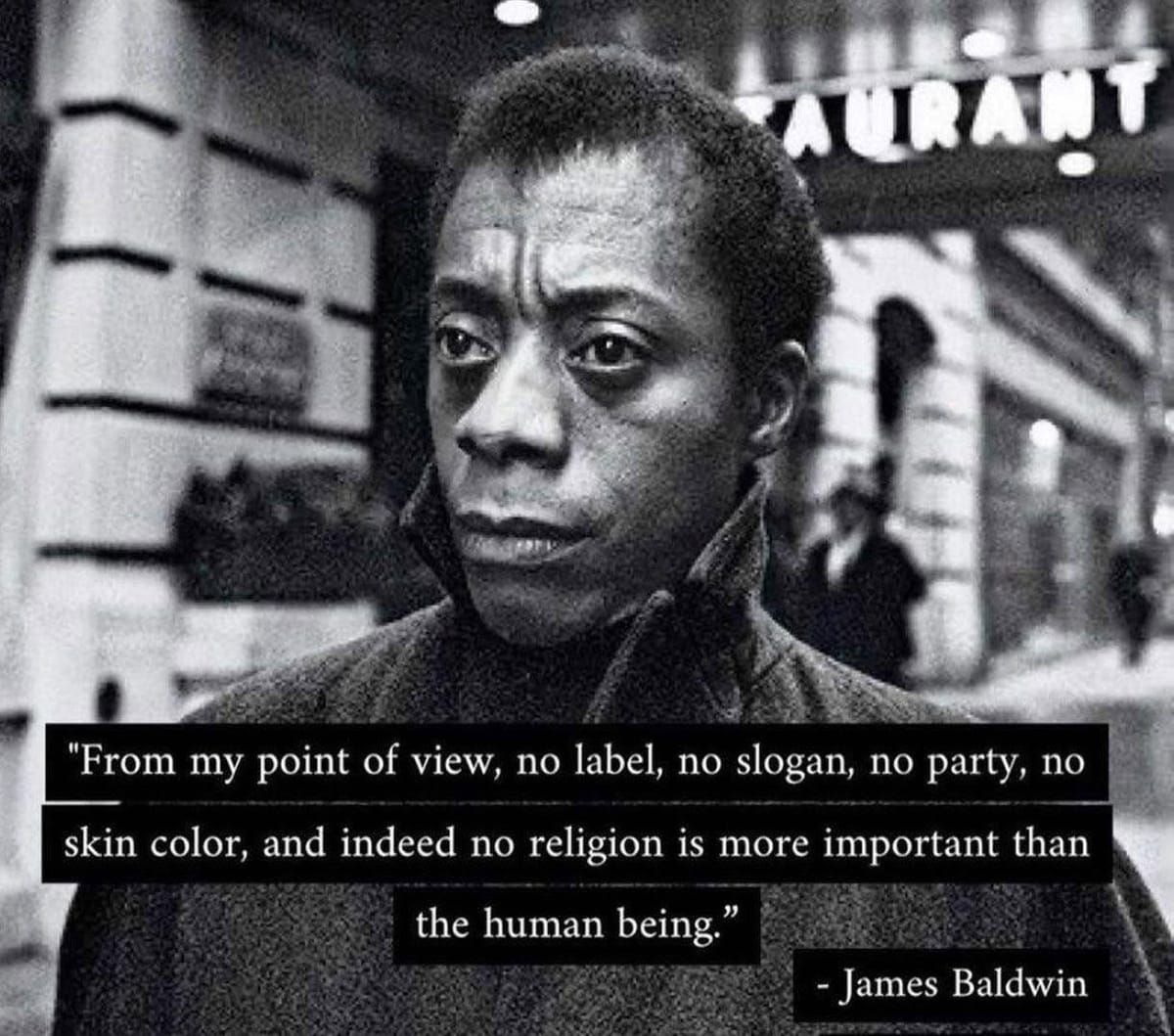
James Baldwin offered one of the most insightful dialogues on the psychology of American racial supremacy in 1963:
"What white people have to do, is try to find out in their hearts why it was necessary for them to have a nigger in the first place. Because I am not a nigger. I am a man. If I am not the nigger here, and if you invented him… then you have to find out why. And the future of the country depends on that."
To address the ingrained discrimination in our society, it is the hegemonic Bamar psyche that needs to be interrogated in the same manner.
The Burmese must pose the same inquiry that Baldwin had posed to America:
“What Burmese people must do is try to find out in their hearts why it was necessary for them to have a Kalar in the first place. Because the object of that slur is not an abstraction; he is a human being. If he is not the Kalar, and if society invented that term to perpetuate its dominance, then Myanmar must find out why. The whole future of a federal democratic nation rests on that.”
Afterall, the power of the Burmese supremacy and its claim of sole indigenous status while leaving people of Indian descendent as settlers in Myanmar are threatened whenever a non-Burmese person refuses to accept their definition of words and their fictional histories.