Imagined Space Solidarities: Rumah Merdeka
Today's working class is frequently confronted with illusory choices in the face of socio-ecological crisis, corporate power, and increasingly acute work alienation. Mainstream unions are frequently trapped in internal bureaucracy, ineffective bargaining compromises, or simply become extensions of electoral political parties. At this low point, the necessity for really autonomous, radical, and economically and politically empowered alternative organizations is very essential.
Even in a dynamic socio-political scene, working-class groups are more than just a collection of people. They are the heartbeat of society aspirations, acting as an explosive catalyst of dissatisfaction with oppressive conditions.
The idea of anarcho-syndicalism itself offers a certain solution: make a new world within the shell of the old. This is more than just a theoretical abstraction; it is a practical blueprint for a working-class organization that blends economic independence through self-management (autogestion) with direct action on the front lines of social struggle.
But what makes a working-class organization truly empowering and relevant?
To understand this, this article takes the example of the movement of a working-class group near the Kendeng Mountains in Central Java, Indonesia. This working-class group often goes by the name "Rumah Merdeka" (Freedom House), with the motto "Sayuk Rukun Nyambat Gawe, Sayuk Rukun Ro Kancane" (working with friends). This group, made up of various working-class people with formal education backgrounds, predominantly junior high school graduates, and the spirit of "ora obah ora mamah" (no movement no eating), resolved to create a space for learning and earning a living. There's no standard organizational structure like most rigid organizations out there. Everyone, wherever they come from, whatever their goals, whatever their skin color, whatever their background, whatever age, whatever gender, everyone is welcome to join together. There's no leader or head. It's as simple as this: if you have the ability or knowledge about something, you initiate and transfer that knowledge to other comrades. Whether other comrades are interested or not, it doesn't matter. This isn't just about general knowledge of hard skills or soft skills. Especially knowledge of agriculture, carpentry (including wood, stone, iron, and other crafts), knowledge of audio system and lighting rental services, and knowledge of other services.
For example, we're currently learning and practicing together on rice, chili, and shallot cultivation. Since Comrade Ant can make chairs from iron, he's teaching other comrades how to make them. Comrade Kun can cut and style hair, so he'll teach other comrades how. Comrade Uzi, with his screen printing knowledge, has also initiated a t-shirt screen printing class. Even if there's curiosity about something that no one else knows, we'll usually hold a group lesson about it.
So how can a shared living space be both empowering and relevant?
1. Autonomous Economy: Destroying Bosses in Everyday Life
The basic principle of anarcho-syndicalism is the abolition of the wage system and workplace hierarchy. Rumah Merdeka implements this concretely by managing business units collectively without bosses, where decisions are made through democratic and equal general assemblies in casual conversations accompanied by drinks (mostly Arak).
The three main pillars of this collective's business demonstrate the working class's ability to govern itself:
A. Food Sovereignty in the Agricultural Sector
Without sovereignty over what we eat, political struggles will easily be defeated by hunger. The Rumah Merdeka collective's agricultural sector is run on ecological principles (sustainable housing or agroecology) on collectively managed land.
* Social Function: Harvests are not viewed solely as commodities for accumulative profit.
A portion of the produce is used for members' consumption, a portion is distributed to soup kitchens for strikes or social actions, and the remainder is sold at a fair price to the surrounding community. This is the foundation of mutual aid, breaking dependence on monopolistic capitalist supply chains.
B. Craftsmanship and Infrastructure Independence
The collective's craftsmanship unit focuses on the production of daily necessities, the physical construction of community spaces, the manufacture of work tools and provide services for building or repairing all types of houses, private vehicles, as well as providing handyman services.
* Social Function: Here, knowledge transfer occurs horizontally. New members learn from experienced members without oppressive seniority barriers. In addition to producing furniture and household appliances from high-quality recycled materials, this unit serves as the backbone in emergency situations, such as building disaster relief posts or repairing damaged homes for the urban poor.
C. Audio & Lighting Rental Services: Seizing Cultural Infrastructure
This business unit rents sound systems and lighting equipment for various public events, from independent music concerts to seminars.
* Social Function: This unit is both a highly dynamic economic engine and a powerful cultural propaganda tool. Revenue from commercial rentals is allocated directly to fund political activities, pamphlet printing, and action operations. Interestingly, this equipment is always free or fully subsidized when used for public performances, labor strike consolidations, solidarity stages, or street demonstrations.
2. Defending Living Space: Direct Action Against Extractivism and Gentrification
For anarcho-syndicalists, the workplace is inseparable from the communities where workers live. Factories, rice fields, villages, and forests are all part of a unified living space. When corporations and the state attempt to displace settlements, seize indigenous lands, or destroy the environment for massive infrastructure projects, Rumah Merdeka is on the front lines.
* Blockades and Occupations: Using active nonviolent direct action methods, members of Rumah Merdeka, along with affected residents, organize blockades of roads accessing heavy equipment (e.g., during the protest against the cement factory in Kendeng), occupy land threatened with eviction, and establish civil defense posts (e.g., building the Yu Patmi Mosque).
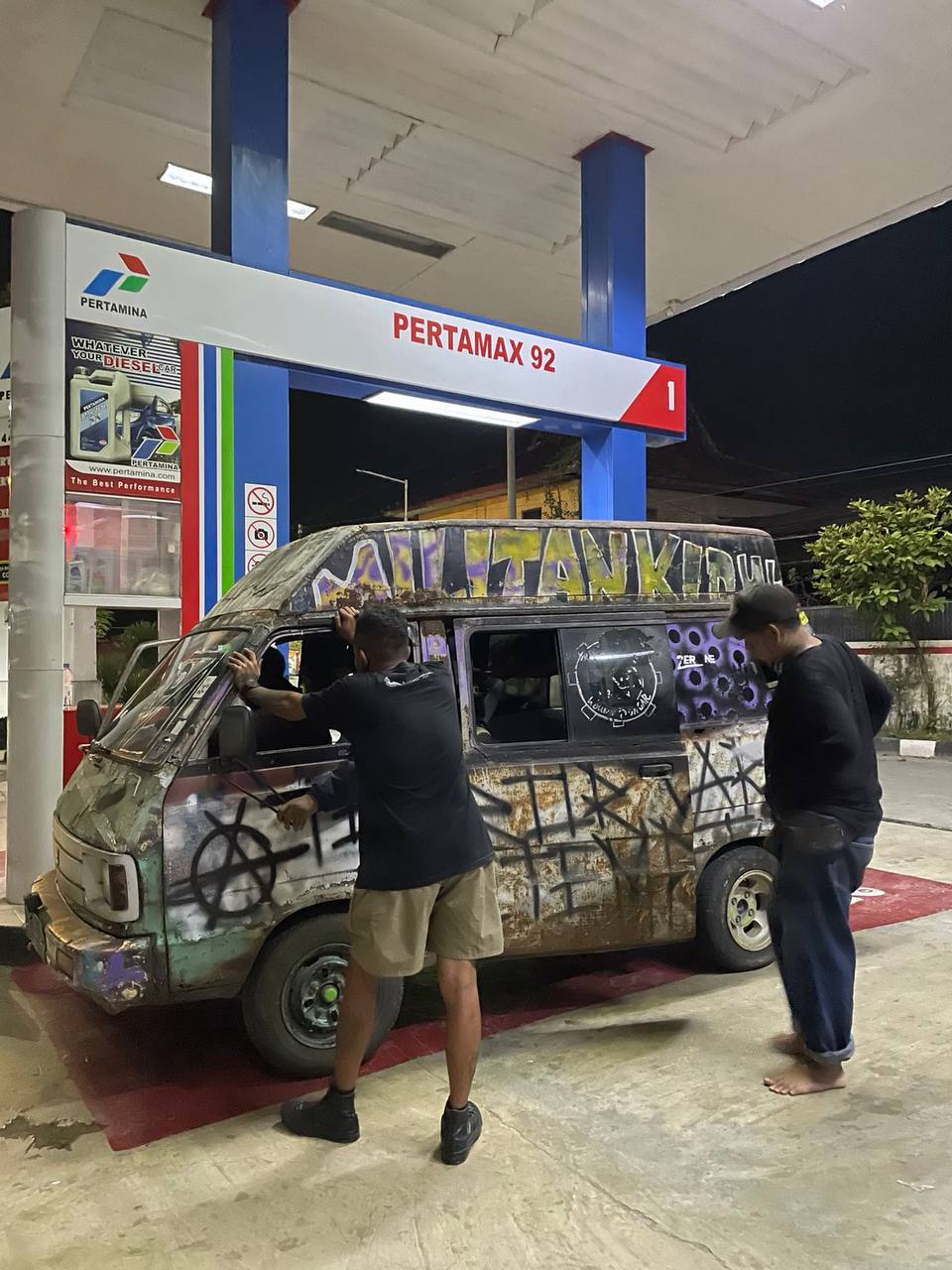
* Cross-Sector Solidarity: Rumah Merdeka does not view environmental issues as a middle-class issue. When rural farmers struggle against cement factories that damage water sources, or when poor urban residents are evicted to make way for luxury building projects, Rumah Merdeka acts in solidarity by sending logistics (food from the agricultural sector), building defense infrastructure (from the carpentry sector), and creating visual aids, both images and installations of symbols of resistance. It also provides loudspeakers (from the audio sector) to ensure the voice of resistance is heard.
3. Solidarity Without Barriers: Standing With the Marginalized
Anarcho-syndicalism rejects the idea that class struggle is solely for cisgender male factory workers in urban areas. Today's class struggle must be intersectional—embracing all elements exploited and marginalized by patriarchy, racism, casteism, and global capitalism.
Freedom House actively builds tactical and organic alliances with:
* Informal and Precarious Workers: Parcel couriers, street vendors, freelance artists, farm laborers, and other daily laborers often overlooked by state labor laws.
* Indigenous Communities and Peasants: Supporting the struggle for customary rights and genuine agrarian reform from below.
* Gender and Sexual Minority Groups: Providing safe spaces for queer people who often experience persecution and discrimination in the formal workplace.
* Political Prisoners and Victims of Criminalization: Raising tactical funds to provide moral and material support to the families of victims of repression by the authorities.
Conclusion: Prefigurative Politics as Key
The primary strength of the working-class organization Rumah Merdeka lies in its prefigurative politics—a way of organizing in which the ways we struggle today reflect the free, classless society we seek to create in the future.
The combination of economic independence from self-managed businesses (agriculture, carpentry, audio) and an uncompromising commitment to direct action in defense of our living spaces proves one thing: we don't need bosses, we don't need politicians, and we don't need bureaucrats. Horizontal structures, mutual cooperation, and radical caring are the key assets for reclaiming control over our own lives.
From below, with our own hands, we are weaving a web of autonomy that refuses to submit to the tyranny of capital.
Homage to Comrade Ant, Comrade Kun, Comrade Uzi, Comrade Ing, Comrade Cup, Comrade Pig, and other Comrades. Long Live Anarchy!!