What Was 9/11?

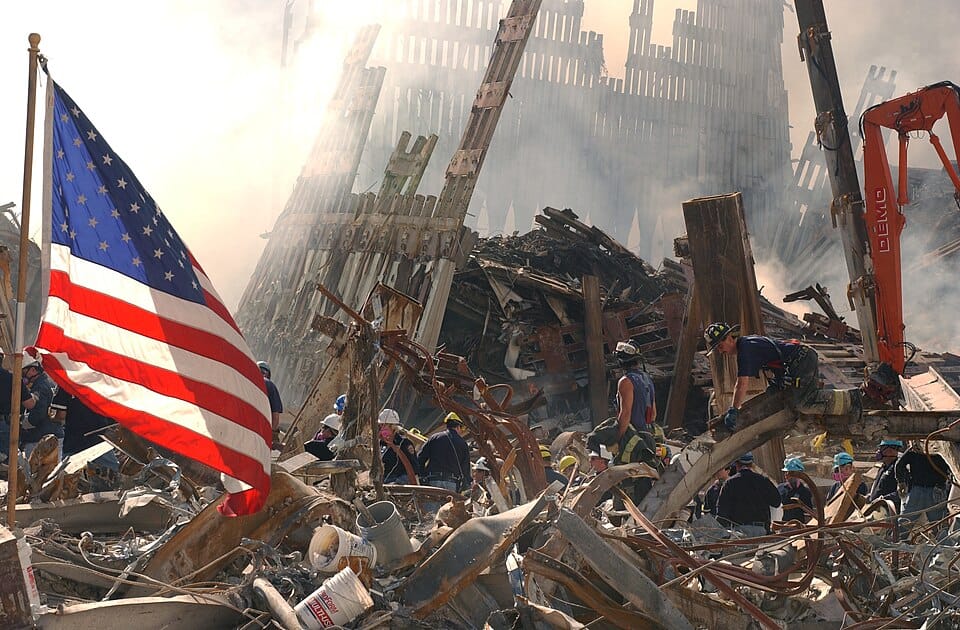
On September 11 2001 hijackers took control of four flights; flying two planes into the world trade center buildings and another into the Pentagon building, with the fourth intended to be crashed into the capitol building being taken over by passengers and crashing in an open field. Nearly 3000 people were killed, including everyone on board flight 93. It was one of the worst tragedies to ever befall the United States and one that nobody expected. It was such a shock that in the aftermath conspiracy theories under the heading 9/11 truth which accused the Bush administration of carrying out the attacks and covering them up proliferated with many passionate believers remaining to this day. This only made the question on Americans' minds; why?, even more pressing. Like all conspiracy theories, 911 truth requires amateur misunderstandings of expert fields such as architecture and physics as well as the postulation of elite plots that are so convoluted as to be completely implausible.
Nevertheless, the answer to the question "why?" is arguably still not appreciated by most Americans, historians, and political scientists. The facts about what happened are well known. A terrorist sleeper cell linked to the jihadi group Al-Qaeda slipped under the noses of the authorities and managed amateur hijackings. There were some early warning signs, but intelligence like this is often to little to be actionable before hand and in any case the intelligence agencies at the time were caught in bureaucratic rivalry, lowering the probability that they would pay sufficient attention to already vague warnings.
But why did Al-Qaeda do this? And how could they have pulled off such a wounding of the world's most powerful nation? The narrative perpetuated since has been that the terrorists 'hate our freedom', but this is nothing more than patriotic self-assurance and an ironic one given over all surveillance, detention, and deportation Muslim Americans were subjected to by the US government in the immediate political aftermath as well as the Bush administration's general increase in state surveillance of civilians through the Patriot Act. The terrorists did not hate the United States for its 'freedom'. They hated the United States for something much different.
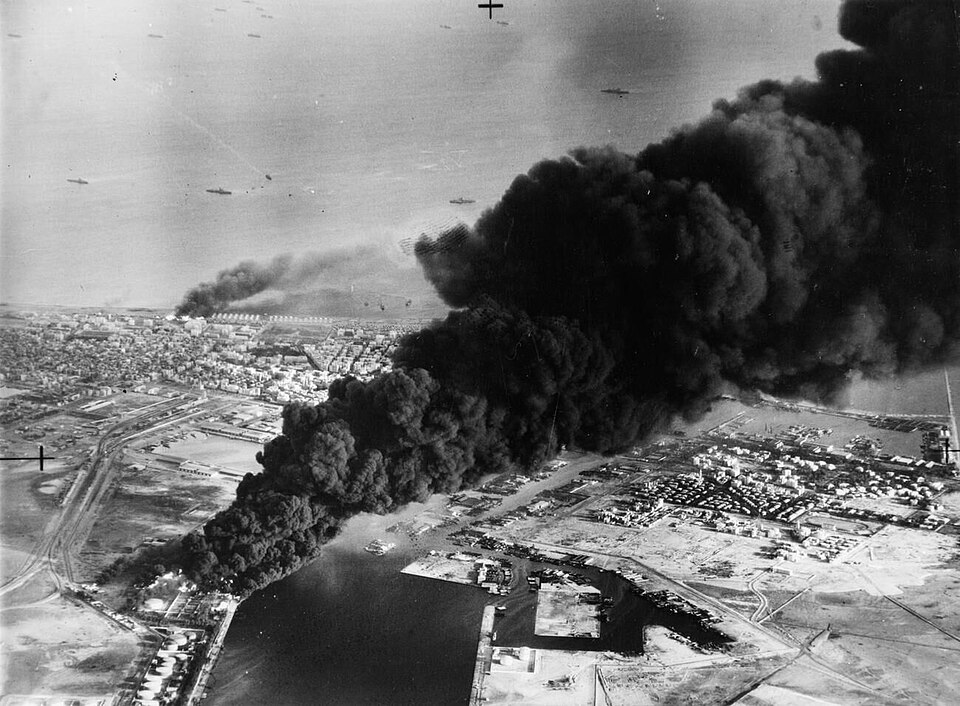
During the Cold War the United States was a hegemonic power within the capitalist world-economy. This means that the United States got its way in the geopolitical arena the vast majority of the time. This can be seen, for instance, in the efficacy with which the United States was able to demand that Israel, Britain, and France back off the Suez Canal in 1956. This hegemony, like all forms of hegemony before it, was backed up by the leading position of US producers after WWII visa vi Western European and Japanese rivals, itself the product of the fact that the United States, being relatively untouched by the war, was in a position to lead economic reconstruction of the west through the Marshall Plan. This meant that the United States presided over the global geopolitical order at a time when the Wes Asia was attempting to use the opportunity of general decolonization to achieve meaningful self-determination for West Asian peoples in the face of their historical subjugation by Western powers.
By the late 20th century the secular national liberation ideologies such as Pan-Arab Nationalism, 'Arab Socialism' (which was really an Arab version of the combination of republican ideology and Autocratic leadership found in the Jacobins of the French Revolution), and Marxism-Leninism (the Soviet dominated communist movement), had largely been blocked by western cold war meddling in regional affairs. As such Western Asian countries turned to Islamist and Islamic fundamentalist approaches to politics in order to achieve cultural and political independence from the west. US policy ironically did much to spread this kind of Islam throughout Western Asia.
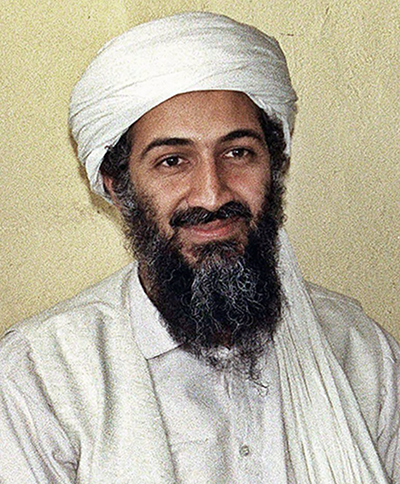
FDR cultivated a relationship with the Kingdom of Saud in which they would continue to supply America with oil in exchange for American financial backing. The Saudis used this American money to set up schools around the region which indoctrinated generations of West Asians in a theologically conservative and fundamentalist version of Islam known as "Wahhabism". Not only did all this create a contemporary reality in which West Asian politics is often dominated by Islamism (a version of Islamic political conservativism in which authoritarian politics is used to attempt to meld the political, private, and religious spheres back together), but also created the seeds for a new form of revolutionary politics called 'jihadism'. Al-Qaeda ('the base' in English) was the motive force behind the founding of this ideology. They began to see western imperialism under US hegemony as a force that was morally corrupting Islamic cultures with secularism, multiculturalism, and cultural materialism.
They concluded that a revolutionary struggle had to be waged against the capitalist world-system and its geopolitical order in order to bring about a morally pure Islamic political community and this struggle needed to be waged by a global campaign of violent self-sacrifice on the part of individual believers awakened to revolutionary consciousness. The jihadi worldview turned out to be one of the most violent in world history leading its practitioners to carry out acts of mass violence first against civilians and elites in Islamic and West Asian cultures and then against those in Western Europe, Japan, and the broader Anglosphere. American hegemony had created its own mortal ideological enemy. That hegemony, however, was not to last.
Around two decades into that hegemony the economic reconstruction of the Marshall plan started enabling Western European and Japanese producers to beat out the Americans in leading industries such as automobiles. Further, the US decision to invade Vietnam burned through US Gold reserves, created a massive antiwar movement that united anti-war veterans with civil rights campaigners, and brought about a crushing defeat. The crescendo was the fall of the Soviet Union. Despite the fact that it was sold as the triumph of US power the disappearance of the Soviet Union meant the end of the division of the world between the two powers such that two thirds of it were under the ideological control of the United States. The end of US hegemony provided the opportunity for the jihadist movement to strike and that's what they did.
Perhaps the most alarming thing over 20 years later is that none of the issues which produced 9/11 have been resolved. The reaction of the United states to its loss of hegemony has been to ratchet up imperial interference in West Asia, rather than reduce it. After two largely failed wars in Iraq and Afghanistan (post-Saddam Iraq is a society ridden with Sunni/Shi'i sectarianism and Afghanistan is now back in the hands of the Taliban) the United States has engaged in another mid-east war, this time from the air, against Iran over its future nuclear capabilities that is killing US service members, exhausting ship crews, depleting American missiles and oil, and creating a global economic downturn as a result of the constriction of the Hormuz strait. Jihadism continues to be a threat on the world stage.
Al-Qaeda has never been fully eliminated despite the fact that this was a purported goal of the global war on terror launched in 911's aftermath under US leadership. In fact, the toppling of Saddam in Iraq produced a new transnational jihadi terrorist organization known as Islamic State which managed, in addition to carrying out deadly terror attacks across the world, to take over a swaths of Iraq and Syria in which they imposed a bloody jihadi form of governance. The United States put together a coalition that wiped out Islamic State in the late 2010s, but its former militants haven't simply disappeared by any means. Jihadi terrorism has become a major problem in the Sahel directly proportional to the increase in US lead counterterrorism in the region. Al-Qaeda affiliate JNIM now threatens the entire country of Mali.
Further, despite an increase in American imperial overreach hegemony is not coming back. The United States now has a serious competitor for global power in China (and another to some degree in Russia) and under the second Trump administration is actively alienating its historical allies via punitive tariffs and efforts to appease, rather than confront Russia. Given that all of the issues which produced 911 are still on the geopolitical table a daunting prospect makes itself known. If current trends continue America could face future 911 style catastrophes.
Given that all of these issues are driven by a capitalist world-system which necessitates materialistic and militaristic political-economic competition the only way to resolve them and prevent future 911s is to create a new world-system on the ashes of global capitalism. This world-system would be one that is not driven by industrial competition and coercive mechanisms of state control. Instead it would be organized around free industrial cooperation to meet the needs of all human beings. It would integrate material and spiritual wellbeing so that there would no longer be any need for human beings to attempt to submit themselves to a world beyond in order to find meaning. This world socialist-confederation can only be created by the self-organization of those oppressed by the current system as the centers of political power will, as capitalism falls apart, trend toward the creation of new, perhaps worse, forms of exploitation of human being by human being in order to preserve elite privileges.
Sources
https://www.bbc.com/news/world-middle-east-35695648?
The Abrahamic Religions: A Very Short Introduction, L. Cohen
Turning Point: 911 and The War On Terror, Knappenberger
The Bitter Lake, Adam Curtis
The Power of Nightmares, Adam Curtis
Precipitate Decline: The Advent of Multipolarity, Wallerstein
The Eagle Has Crash Landed, Wallerstein
What Cold War in Asia?, Wallerstein
The End of Jihadism?, Tompkins
https://apnews.com/article/carney-canada-davos-trump-eee151f749f35c8b30a9ff4a9525d0be
https://theconversation.com/natos-internal-cohesion-is-being-threatened-again-but-in-pushing-for-support-on-iran-trump-may-risk-eroding-us-influence-on-the-alliance-279623
https://www.youtube.com/watch?v=xnRXAsljoV4
https://www.youtube.com/watch?v=i0VEon0agBE
https://www.youtube.com/watch?v=wkImJHdMFIU